Last updated: May 2, 2026
Blown-In in Dulzura, CA.
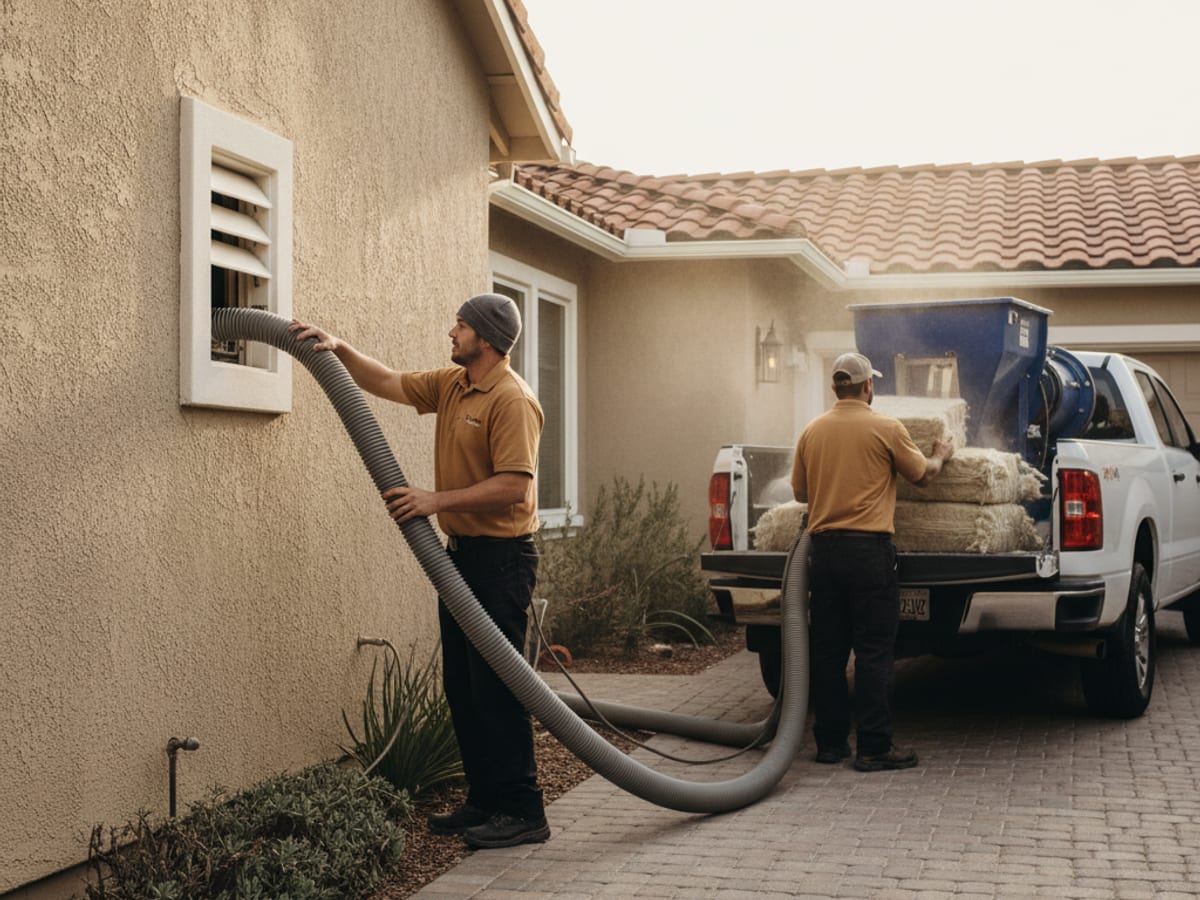
Blown-In for Dulzura homes, done by a vetted local insulation crew. Blown-in is the workhorse for retrofits. Cellulose or fiberglass loose-fill goes into attics fast and cheap.
Why is blown-in different in Backcountry San Diego?
Backcountry blown-in often goes deeper than code minimum because winter heat loss is a bigger concern than summer cooling. R-60 cellulose attics are common in Julian and Pine Valley.
What's included in blown-in in Dulzura?
- Cellulose or fiberglass loose-fill for attics
- Dense-pack cellulose for closed wall cavities (drill-and-fill)
- Truck-mounted blowers for proper density and reach
- Pre-blow air sealing of penetrations
- Baffle installation at eaves to protect soffit vents
- Depth markers on rafters for inspection verification
- Cleanup and HEPA vacuum of the work area
When does a Dulzura home need blown-in?
- Existing attic is under R-19 and you want to top up
- You bought an older home with no wall insulation
- You hear a clear difference between rooms on opposite sides of the house
- You are doing a stucco redo and can pull a few cores for dense-pack
- You want a budget alternative to spray foam
What do Dulzura homeowners ask about blown-in?
How soon can you schedule blown-in in Dulzura?
In-home estimates in Dulzura are usually same-week, and most jobs book one to two weeks out depending on scope. Insulation removal for rodent or water damage gets priority dispatch.
What does blown-in cost in Dulzura?
$1.20–$2.60 per sq ft installed for attics; $3–$5 per sq ft of wall for dense-pack. Pricing is the same across San Diego County, with no mileage upcharge for Dulzura. We confirm a flat-rate quote after a free in-home estimate.
How does Dulzura's climate affect this service?
Dulzura is very rural community east of Jamul at 1,200 ft, large parcels, equestrian properties, self-sufficient lifestyle, well-and-septic universal. Propane heating dominant, off-grid solar adoption growing, freeze protection scope routine on winter mornings.. Backcountry blown-in often goes deeper than code minimum because winter heat loss is a bigger concern than summer cooling.
Cellulose or fiberglass, which is better?
Cellulose has higher R per inch, better air-flow resistance, and is recycled paper treated for fire and pests. Fiberglass is non-organic, lighter, and easier in damp climates. In dry, mild San Diego we use cellulose more often unless the attic has past moisture issues.
What is dense-pack?
Dense-pack is cellulose installed at 3.5 lb/cu ft into closed wall cavities through small drilled holes. The high density resists settling, plugs air leaks, and adds R-13 to R-15 to a wall that previously had nothing. We patch and texture before paint.
Need blown-in in Dulzura?
Call for a free quote. Same-day service on most repairs, next-day on most installs.