Last updated: May 2, 2026
Blown-In in Palomar Mountain, CA.
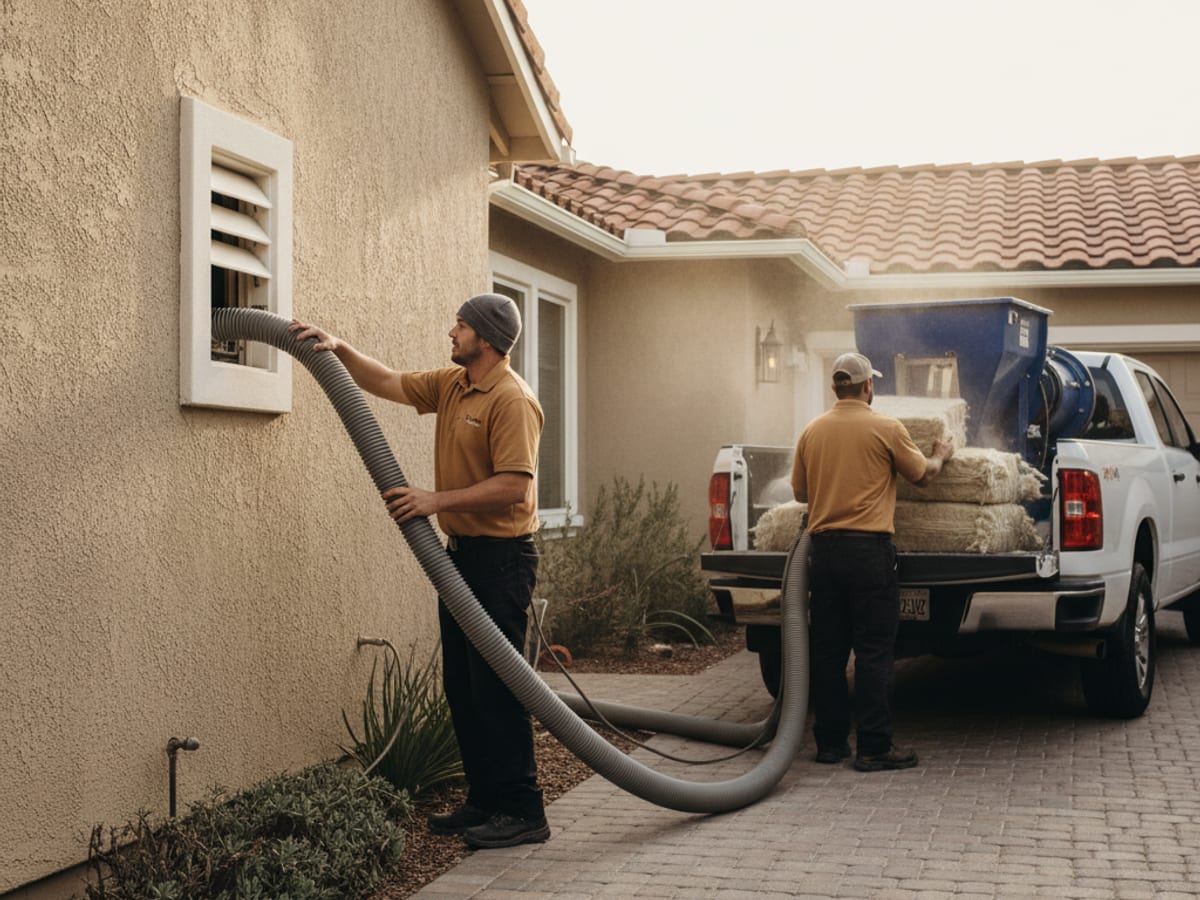
Blown-In for Palomar Mountain homes, done by a vetted local insulation crew. Blown-in is the workhorse for retrofits. Cellulose or fiberglass loose-fill goes into attics fast and cheap.
Why is blown-in different in Backcountry San Diego?
Backcountry blown-in often goes deeper than code minimum because winter heat loss is a bigger concern than summer cooling. R-60 cellulose attics are common in Julian and Pine Valley.
What's included in blown-in in Palomar Mountain?
- Cellulose or fiberglass loose-fill for attics
- Dense-pack cellulose for closed wall cavities (drill-and-fill)
- Truck-mounted blowers for proper density and reach
- Pre-blow air sealing of penetrations
- Baffle installation at eaves to protect soffit vents
- Depth markers on rafters for inspection verification
- Cleanup and HEPA vacuum of the work area
When does a Palomar Mountain home need blown-in?
- Existing attic is under R-19 and you want to top up
- You bought an older home with no wall insulation
- You hear a clear difference between rooms on opposite sides of the house
- You are doing a stucco redo and can pull a few cores for dense-pack
- You want a budget alternative to spray foam
What do Palomar Mountain homeowners ask about blown-in?
How soon can you schedule blown-in in Palomar Mountain?
In-home estimates in Palomar Mountain are usually same-week, and most jobs book one to two weeks out depending on scope. Insulation removal for rodent or water damage gets priority dispatch.
What does blown-in cost in Palomar Mountain?
$1.20–$2.60 per sq ft installed for attics; $3–$5 per sq ft of wall for dense-pack. Pricing is the same across San Diego County, with no mileage upcharge for Palomar Mountain. We confirm a flat-rate quote after a free in-home estimate.
How does Palomar Mountain's climate affect this service?
Palomar Mountain is high-elevation community at 5,500 ft with extreme winter conditions, Palomar Observatory iconic location, regular snow events, road closures common winter. Mountain cabin scope with extreme freeze protection and NFPA 211 wood stove clearance standard.. Backcountry blown-in often goes deeper than code minimum because winter heat loss is a bigger concern than summer cooling.
Cellulose or fiberglass, which is better?
Cellulose has higher R per inch, better air-flow resistance, and is recycled paper treated for fire and pests. Fiberglass is non-organic, lighter, and easier in damp climates. In dry, mild San Diego we use cellulose more often unless the attic has past moisture issues.
What is dense-pack?
Dense-pack is cellulose installed at 3.5 lb/cu ft into closed wall cavities through small drilled holes. The high density resists settling, plugs air leaks, and adds R-13 to R-15 to a wall that previously had nothing. We patch and texture before paint.
Need blown-in in Palomar Mountain?
Call for a free quote. Same-day service on most repairs, next-day on most installs.