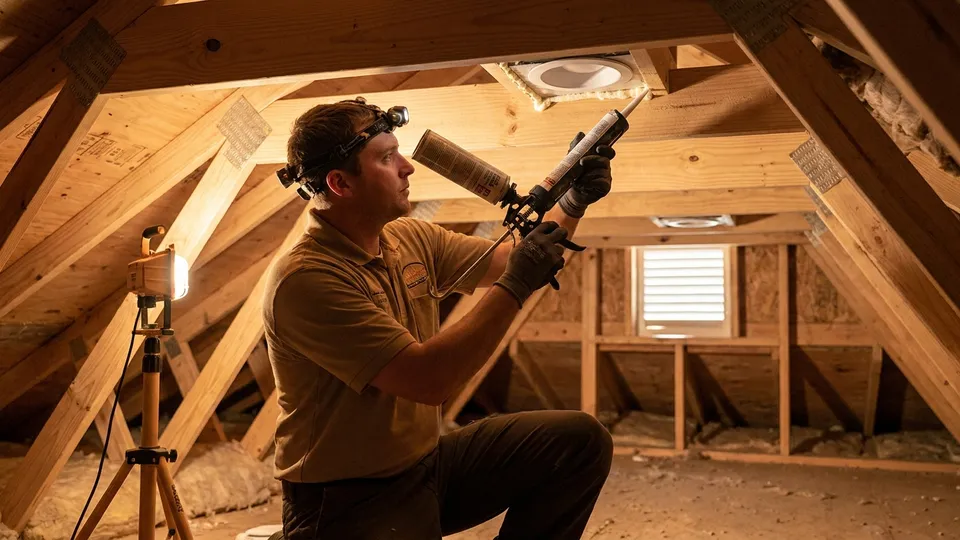
Home weatherization is a set of low-cost fixes, typically $300 to $2,500 total, that stop conditioned air from escaping your house. Done in the right order, a weatherization package usually saves San Diego homeowners 15 to 25 percent on their energy bills. The federal 25C tax credit expired for installs after 2025, but SDG&E still offers periodic rebates on insulation upgrades. Most of the first-tier work pays back in under two years on energy savings alone.
What weatherization actually covers
Weatherization is not one thing. It’s a sequence of improvements that together tighten your home’s building envelope, the shell of walls, ceiling, floor, windows, and doors that separates conditioned space from the outside.
The full scope, from cheapest to priciest:
- Weatherstripping and door sweeps. Doors and operable windows are the easiest leaks to fix. Foam tape, V-strip, or door sweeps cost $10 to $60 per opening and a couple of hours of DIY time.
- Caulking around windows and exterior penetrations. Gaps around window frames, dryer vents, electrical outlets, and pipe penetrations add up. A tube of caulk costs a few dollars; a contractor can seal a whole house in a half-day.
- Attic hatch sealing and insulation. Most attic hatches are bare plywood sitting on bare drywall with no gasket and no insulation. Foam weatherstripping and a rigid foam panel on the back of the hatch take an hour and cost under $50 in materials.
- Recessed-light sealing. Older can lights are major air leaks. Airtight covers foam-sealed from above cost $10 to $20 each and take 15 minutes per fixture. This one surprises homeowners every time we show them thermal images.
- Air sealing at top plates and penetrations. The horizontal framing where walls meet the attic is almost always open. Plumbing chases, HVAC chases, and wiring holes also need sealing with expanding foam. This is a professional task; a typical scope runs $400 to $1,200. Read more in our air-sealing guide.
- Duct sealing. Leaky ducts in unconditioned attics or crawlspaces dump conditioned air where it does no good. Mastic sealant or foil tape on duct connections is inexpensive; a contractor can seal a typical system for $200 to $600.
- Insulation upgrade. Once the envelope is sealed, adding or topping off insulation to the correct R-value is the highest-ROI next step. A fully attic insulation upgrade in San Diego typically runs $1,800 to $4,500 depending on attic size and access.
Why sealing before insulating matters
This is the order question we get every week: can’t we just add insulation first?
Insulation slows heat movement through materials. It does nothing to stop air moving through a hole. An unsealed attic with new R-49 cellulose on top still has open top plates, open can lights, and an uninsulated hatch. The insulation does its job; the assembly doesn’t.
We’ve measured 30 to 50 percent of total heat loss in older San Diego homes coming through air leaks rather than through the insulation material itself. If you insulate without sealing, you’re spending $2,000 to $4,000 on a job that will underperform from day one. Sealing first also makes the insulation easier to install correctly, because you’re not pushing material around penetrations hoping to cover them.
The professional air-sealing service we do before an insulation install takes two to four hours. It’s the step that makes everything else work.
San Diego-specific priority table
San Diego’s climate is mild, but the coastal marine layer, hot inland valleys, and the desert edge of East County mean the right priorities shift by zone. This table gives honest cost ranges and rough payback periods.
| Improvement | Typical cost | SDG&E rebate | Payback estimate |
|---|---|---|---|
| Weatherstripping and door sweeps | $10-$150 DIY | No | Under 1 year |
| Window and penetration caulking | $50-$300 | No | Under 1 year |
| Attic hatch gasket + rigid foam | $30-$100 DIY | No | 1-2 years |
| Can-light airtight covers | $100-$400 | No | 1-3 years |
| Professional air sealing | $400-$1,200 | Check current offer | 2-5 years |
| Duct sealing | $200-$600 | Yes (HVAC-related) | 3-6 years |
| Attic insulation to R-38/R-49 | $1,800-$4,500 | Yes | 4-8 years |
Coastal homes in Title 24 climate zone 7 should prioritize the air-sealing and duct-sealing rows first, because heating and cooling loads are modest and marginal insulation gains are smaller. Inland valley homes (zone 10) and East County (zones 14-15) get more from the insulation upgrade because temperature swings are wider and cooling loads are higher.
What happened to the 25C tax credit, and what SDG&E still offers
The federal 25C energy-efficiency credit used to cover 30 percent of qualifying insulation and air-sealing costs, up to $1,200 per year. It expired for property placed in service after December 31, 2025, so weatherization work done in 2026 doesn’t earn a federal credit. If your work was completed in 2025, keep the contractor’s invoice and the manufacturer’s product certification sheet and claim it on your 2025 return with IRS Form 5695. Federal rules can change again, so confirm the current status with a tax professional before you count on anything.
SDG&E’s rebates change periodically; the amounts and qualifying measures are listed on their website. Before we scope any weatherization job, we check what’s currently active and build it into the estimate so you don’t leave money on the table. The full SDG&E rebate breakdown for 2026 covers current amounts and application steps.
Starting with an energy audit
If you’re not sure where your house loses the most energy, a home energy audit gives you a ranked list. An auditor uses a blower-door test and a thermal camera to find and quantify every major leak. The audit typically costs $150 to $400, and the report tells you exactly which improvements have the highest return.
We don’t always require a formal audit before a weatherization scope. For most San Diego homes built before 2000, the leaks are predictable: attic hatch, top plates, can lights, and duct connections. A visual inspection with thermal imaging on a cool morning tells us enough to build an accurate scope.
For homes that are already partially upgraded, or if you want the utility-program paperwork that comes with a certified audit, the formal test is worth it.
What to ask a contractor
Any contractor you hire for weatherization should be able to answer these four questions without hesitation:
What’s the sequence? Sealing first, then insulation. If they say they’ll blow in insulation and seal at the same time, they’re doing it wrong.
How do you document the air sealing? Photos of each penetration sealed, before and after. This matters for your records and for rebate paperwork.
What product certifications do you carry? Manufacturer certification statements document that the product meets its rated specs, and utility rebate programs often require them. A legitimate contractor has these on file.
What’s the R-value target? California Title 24 sets minimum requirements; the right target for your climate zone depends on whether you’re inland or coastal. Typical attic targets in San Diego range from R-38 to R-49. You can model your specific home with our insulation calculator.
Every weatherization scope we write includes the sealing work, the documentation, and the manufacturer certifications you need for rebate paperwork.
A practical starting point
If you’re not ready to do everything at once, start at the top of the priority table and work down. Weatherstripping, caulking, and the attic hatch take an afternoon and cost under $200. They won’t cut your bill by 25 percent, but they will cut it. Then, when you’re ready to do the air-sealing and insulation pass, you’ll have already closed the easy leaks.
If you want a single scope that covers the whole envelope at once, that’s what we do most often. We come out, do a visual inspection, quote the full sequence, and execute it in one visit. Most jobs are done in a day.
To schedule a free assessment, call us at (858) 925-5546 or use the contact form. We’ll tell you exactly what your house needs and what it will cost, with no pressure to do it all at once.